

THE BUFFER ZONE
(The Logic of Proximity)
Personal space isn’t just a human preference; it is a biological requirement for survival. In the world of Petz Logic, we call this the "Invisible Bubble." Simply standing near an animal—or moving toward them—isn't just a physical action; it is a high-level form of communication called Proximity Pressure.
Every animal has a Flight Distance—the exact "red line" where an intruder gets too close and the animal's brain says they must react to stay safe. When we ignore these boundaries, we force our pets to use "Go Away" signals like growling, hissing, or biting just to get a "spatial reset." Learning to read the bubble allows you to build trust instead of tension.
Dogs: The Social Dance and the "Invisible Lean"
Dogs are arguably the most social creatures in our homes, and many are "social butterflies" who seem to have no personal bubble at all. However, even the friendliest dog is constantly processing Proximity Pressure. When we lean directly over a dog to pet the top of their head, we are projecting a lot of vertical energy onto their neck and shoulders.
The Logic: For many dogs, a human "looming" overhead is simply a confusing piece of data. A confident, wiggly dog might interpret that pressure as a cue to jump up and meet your face—leading to those accidental "head-butts." A more observant or shy dog, however, might feel "crowded." If they are on a leash or tucked into a corner, they can’t move their body to equalize that pressure. They aren't necessarily "mad," but they may feel the biological need to create space by stiffening their body, looking away, or, in some cases, giving a low "verbal" request for more room.
The Spectrum of Response: It’s important to remember that every dog has a different "Safety Bubble" size. One dog might want to be in your lap the second you sit down, while another prefers to sit two feet away and just observe. Both are showing affection; they just have different Spatial Logic.
The Fix (The Invitational Greeting): To keep the interaction relaxed and respectful, try the "Invitational Approach." Instead of leaning over them, try to crouch down or simply stand with your side to the dog. This "softens" your physical presence and removes the vertical pressure.
The Goal: Extend your hand low (below their chin level) and wait. If the dog closes the final few inches to sniff or lean into you, they have "accepted the invite." By letting them bridge that last gap, you turn a "looming" moment into a mutual social dance where the dog feels heard and respected.


Cats: The Three-Dimensional Safety Net
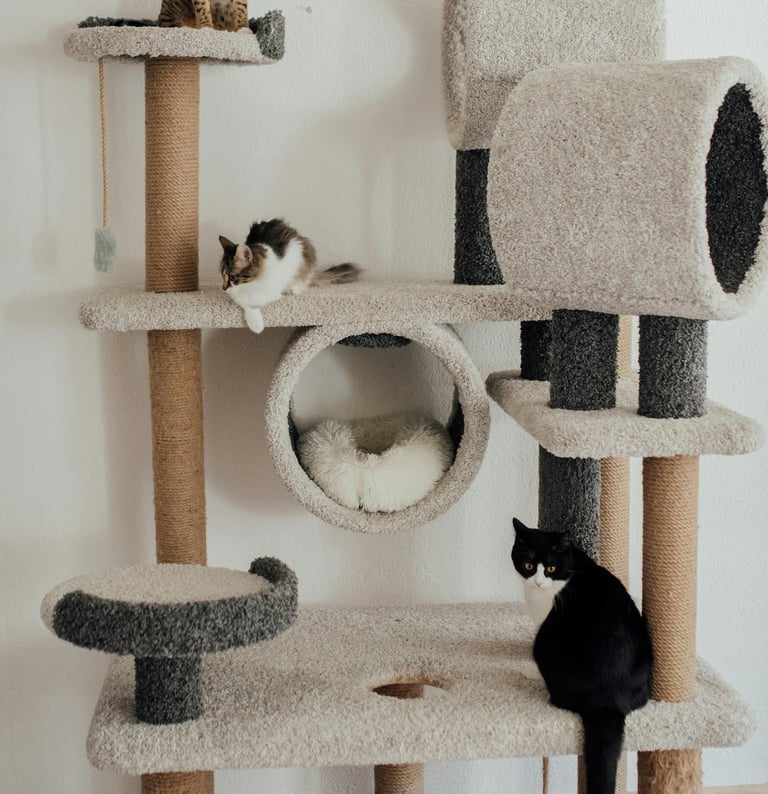
For a cat, the world isn’t just a flat map; it’s a vertical playground. While some cats are "bush dwellers" who love a good rug, most feline logic is built on the idea that height equals safety. When a cat is hanging out on the floor and a human or a dog walks directly toward them, their Flight Distance is tested in a way that feels much more intense than it does for us.
The Logic: At only about a foot tall, a cat on the floor is looking up at a world of giants. When you move toward them, you aren't just "walking"; you are a mountain of Proximity Pressure closing in. If the cat doesn’t have a clear "launchpad" or a path to move upward, their brain can hit a binary choice: Escape or Defend. If they feel they can't get away fast enough, they might shift into "Tiny Tiger" mode—using a hiss, a swat, or a puffed-up tail—to force a "spatial reset" and get you to back off.
The Perspective Shift: It's important to realize that cats don't always react out of "meanness." Often, what looks like a grumpy cat is actually a cat that feels "trapped" on a two-dimensional plane. They want to be social, but they want to do it from a position of power. When a cat can look down on a situation, their heart rate drops, and their confidence spikes.
The Fix (The Vertical Outlet): You don’t need to transform your home into a cat gym. To lower spatial tension, simply ensure your cat has a "Vertical Outlet" in high-traffic areas. This can be as easy as clearing a spot on a sturdy bookshelf or repositioning a chair to act as a stepping stone to the top of a cabinet. The goal isn't a complex construction project; it’s just making sure that if the floor feels "busy," your cat has a quick, predictable way to get above the pressure and observe from a position of safety.
The Strategy: Ensure every major room has a "high-ground" option—a shelf, a cleared-off mantle, or a sturdy cabinet. When a cat knows they have an instant "Up" button, they stop worrying about who is walking toward them. They become calm observers rather than defensive sentries. By respecting their need for height, you aren't just giving them a place to sleep; you're giving them the biological "receipt" that their safety bubble is protected.


Birds: The Perch Threshold and the "Feathered Buffer"
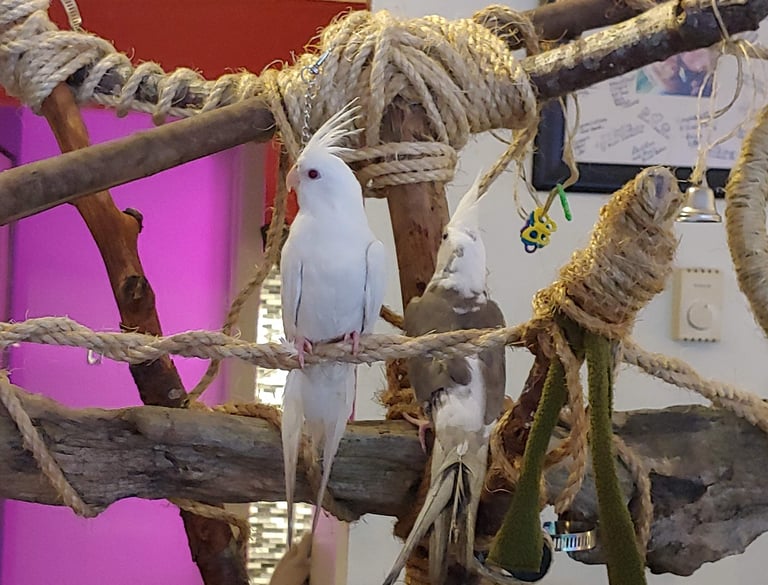
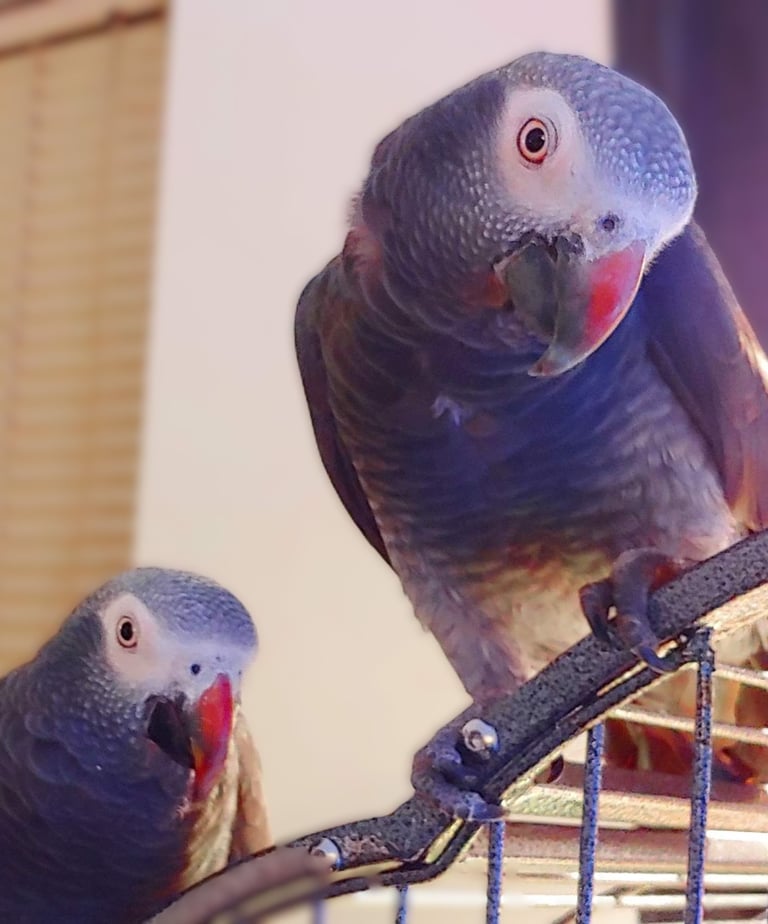
Birds are essentially high-speed processors with wings. In the wild, their survival depends on being the first to notice a change in the environment, which makes them masters of the "Quick Exit." Because of this, a bird’s safety bubble can feel a bit more dynamic than a dog’s or a cat’s—it can expand or contract based on their mood, the time of day, or even the speed of your movement.
The Logic: When a hand reaches directly toward a bird on a perch, the bird isn't necessarily thinking, "I’m going to bite this person." Instead, their brain is running a high-speed calculation: "Is this a predator’s talon? Is this an invitation to play? Or is this an invasion of my personal space?" Even the most affectionate parrot has moments where they want to be "off-duty." A hand moving too fast or crossing the Perch Threshold without a "social receipt" can trigger a defensive reflex before the bird even realizes it’s you.
Reading the Body Language: Not every bird reacts to a breached bubble with a scream or a lunging beak. Many birds use subtle "pre-flight" signals. Watch for the "Lean"—when a bird shifts their weight to their back legs or tilts their body away from you. They might also sleek their feathers down or give a tiny, sharp wing flick. These aren't "mean" gestures; they are polite, avian ways of saying, "I see you, but I’m not ready for a close-up just yet."
The Fix (The Rhythmic Entry): To turn an "invasion" into a conversation, use the Rhythmic Approach. Instead of a direct "beeline" for the bird, move in a slow, steady rhythm. Speak softly as you approach to provide a "verbal receipt" of your intent.
The Strategy: Stop just outside their visible bubble (usually about 12 inches away). If the bird stays relaxed and curious, you’ve been invited in. If they lean away, simply pause. Wait for them to "reset" their posture—maybe they’ll fluff their feathers or grind their beak. By waiting for that tiny signal of relaxation, you are proving to the bird that you respect their THE HAVEN LOGIC. You are becoming a predictable, safe partner rather than a "looming" threat.
Hamsters & Small Mammals: The "Owl" Effect and Ground-Level Logic
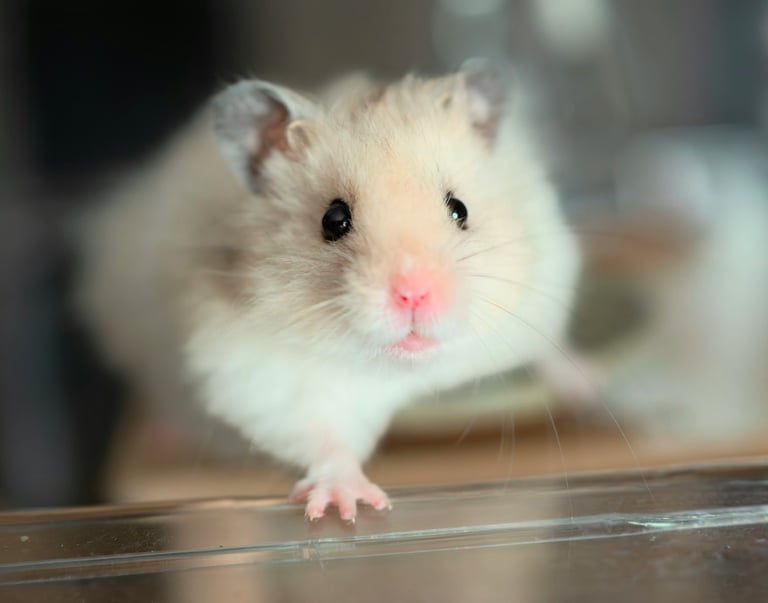
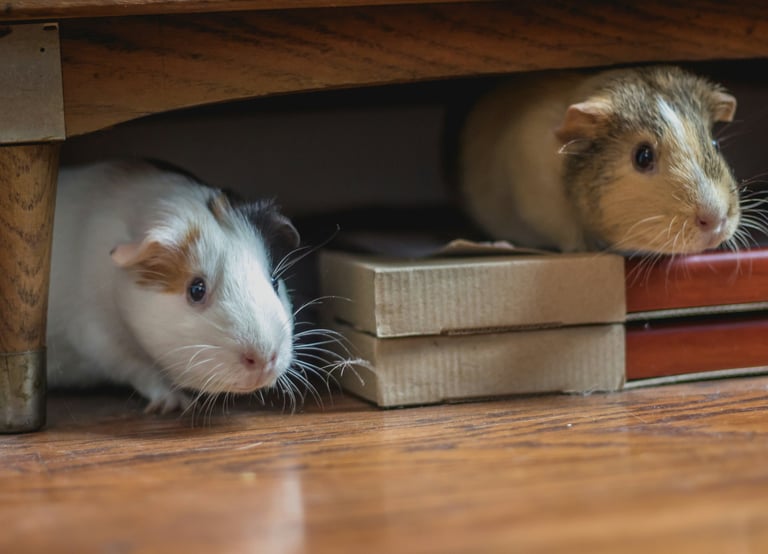
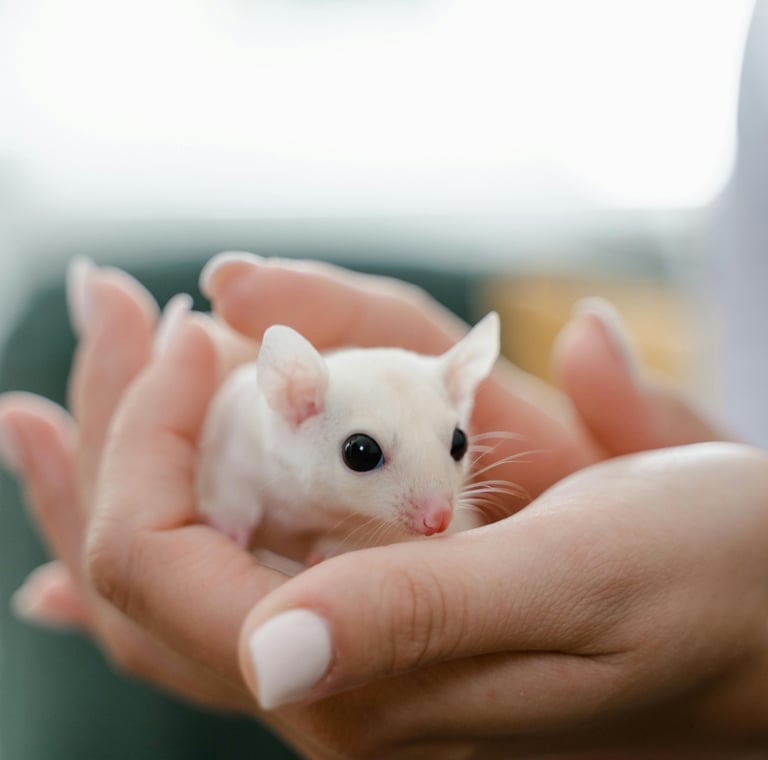
Small mammals like hamsters, gerbils, and rabbits live in a world governed by Ground-Level Logic. Because they are naturally at the bottom of the food chain, their primary security concern comes from the sky. In their world, a shadow moving overhead isn't just "human presence"—it’s a data point that mimics a predator.
The Logic: When we reach into an enclosure from the top, we are inadvertently triggering a millions-of-years-old survival program. To a hamster or a rabbit, a hand descending from above is a perfect mimic of an owl or a hawk dropping in for a meal. Even the "sweetest" pet can hit a state of high arousal when their bubble is breached from above. This is why a hamster might suddenly nip or a rabbit might "thump" and dash away—they aren't being "aggressive"; they are simply responding to an emergency Overhead Data alert.
The Nuance: It’s important to realize that not every small pet will react with a bite. Many will simply "pancake" (freeze) or retreat to their hidey-hole for hours. This "quiet stress" is just as significant as a nip. When they feel "hunted" in their own sanctuary, their trust in the human "lead" starts to erode. They want to be social, but their biological manual tells them that anything looming from above is a threat until proven otherwise.
The Fix (The Side-Entry Pivot): To turn a "hunted" feeling into a social interaction, we have to change the angle of our approach. The goal is to move from Predator Logic to Partner Logic.
The Strategy: If you have a top-opening cage, don't just "grab" from the sky. Instead, lower your hand to the side of the enclosure first. Use a "Bridge"—like a cardboard tube or a small box—and let the pet walk into it voluntarily. If you are picking them up by hand, use the Scoop Method by bringing both hands in from the sides at the level of the bedding. This simple shift in direction changes the data from "Attack" to "Invitation," proving to your small friend that you are a safe, predictable anchor in their world.
Snakes & Reptiles: The Sensory Red Line and the "Detection Zone"
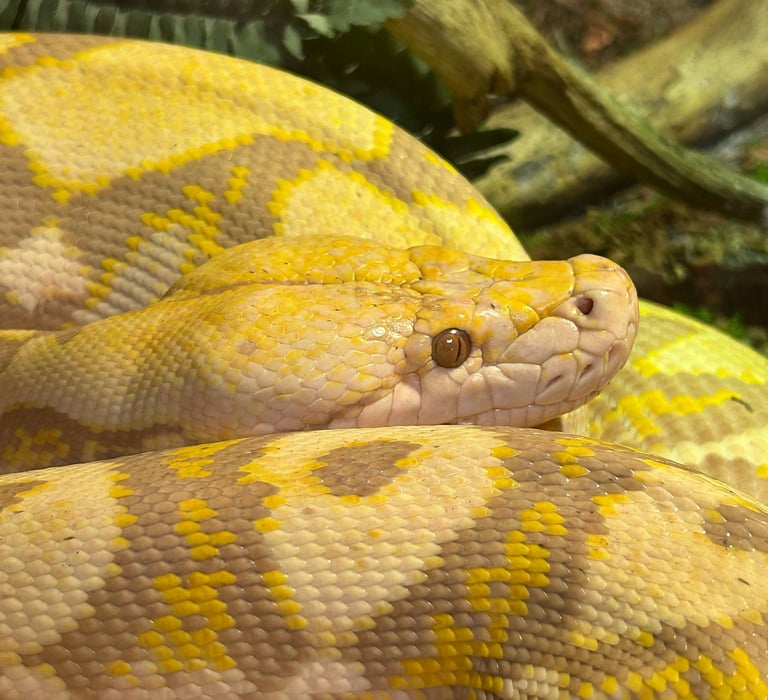
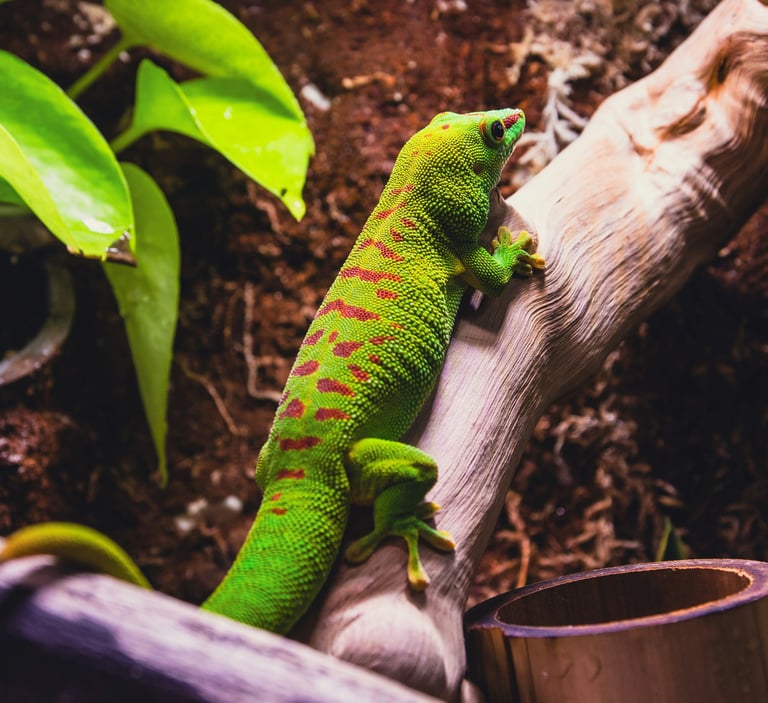
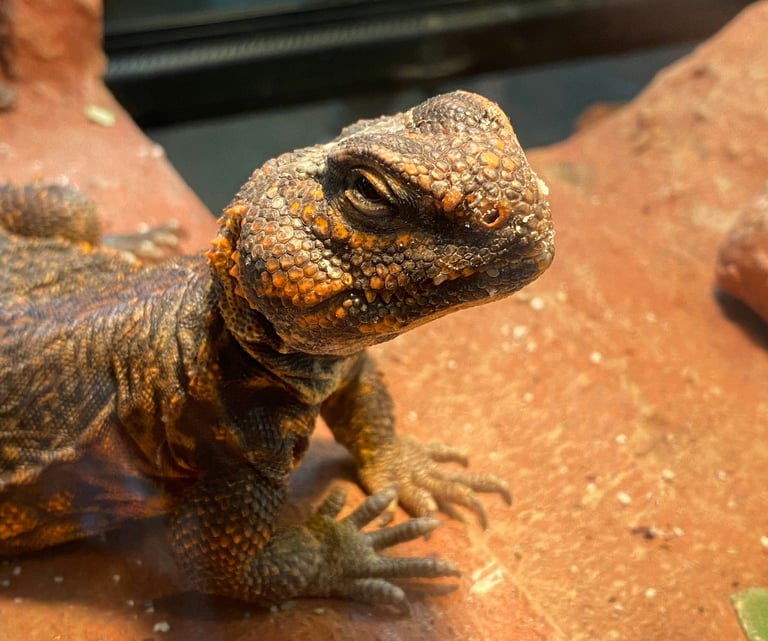
Reptiles and amphibians don't process "social" feelings the same way a dog or a bird might, but they are world-class experts in Sensory Logic. They don't wonder if you're having a bad day; they monitor the thermal, chemical, and motion data within their bubble to decide if the "Giant" in front of them is a threat, a resource, or just a part of the scenery.
The Logic: For a snake or a lizard, the buffer zone is more like a Detection Zone. When you move too quickly or "loom" directly over their head, you are sending a flood of high-arousal data to their brain. To a snake, a hand reaching from above isn't a "pet"; it’s a heat-signature that mimics a predator’s strike. If you enter that strike zone without a "social receipt," their brain hits a defensive reflex. That classic S-curve or the "huffing" hiss isn't them being "mean"—it's a biological "Stop Sign" intended to prevent a conflict before it starts.
The Nuance of Trust: Building a bond with a reptile isn't about "love" in the traditional sense; it's about Predictability. A calm reptile is one that has evaluated the data in their bubble and found it to be consistent and non-threatening. When they realize that your presence doesn't lead to a breach of their safety, their nervous system drops from "Sentry Mode" to "Observer Mode." They want to be able to bask and explore without having to constantly calculate the distance between them and your hands.
The Fix (The Low-Arousal Approach): To turn a defensive posture into a relaxed interaction, you must become a Low-Arousal Presence. This means moving with steady, purposeful intent rather than jerky, fast motions.
The Strategy: Avoid the "Direct Line" to the head. Instead, move your hands toward their mid-section or the side of their body. If you see them tense up or shift into a defensive curve, stop and back off two inches. That tiny bit of space is the "Information Receipt" they need. By respecting that extra two inches and waiting for their muscles to soften, you are proving to the animal that you aren't a threat. You are showing them that you speak their sensory language, allowing the "Sentry" to finally stand down.
The Human Element: Being a Grounded Anchor
Respecting the Buffer Zone requires you to be a Grounded Anchor. Your pet is constantly reading the "weight" of your presence. If you are rushing, moving abruptly, or constantly reaching, you are applying pressure without even knowing it.
By slowing down and acknowledging the "Invisible Bubble," you show your pet that you are a partner they can trust. You stop the guessing of "Will they snap?" and start knowing exactly how much space they need to feel safe. When you respect the bubble, the pet finally feels they don't have to defend it.
The Petz Logic System Download the Free P.L.A.Y. Scorecards & More Shop Digital Trackers & Premium E-Books & Systems by Petz Logic






© 2026 Petz Logic. All Rights Reserved. Empowering you with knowledge, not prescriptions. This content is for educational use and does not replace your vet. As an affiliate, we may earn a commission from qualifying purchases at no extra cost to you.
Petz Logic™ and the Petz Logic logo are trademarks used by PetzLogic.com.
Contact me & tell me your story


Don’t miss out Join the Pack
We are constantly adding new logic and tools to the hub. Enter your email to be notified when we release new guides or major updates. No spam, just logic.
petzaremylife@petzlogic.com

A Personal Note
I’m building this ecosystem by hand, piece by piece. Since it’s just me behind the blueprints, I’m always open to hearing your concerns and evolving this design with your feedback. As we grow, I’m planning to add a dedicated Q&A section to help tackle the specific logic of our pets' lives.
All I ask is that you bring those words with kindness. Let’s keep this community as respectful as the animals we love.
Thank you so much 😊
Mo