

The Alarm System:
Alerting vs. Aggression
Every home has a security system. For some, it’s a high-tech camera; for others, it’s a dog barking at the mail carrier, a cat puffing up at the window, or even a bird letting out a sharp alarm call.
In the pet world, we look at the Information Flow. There is a massive biological difference between Alerting (notifying the group that something has changed) and Engaging (moving to handle a threat). When we understand the logic of the "Alert," we can work with our pets' natural talents to create a peaceful, well-informed home.


Cats: The Stealth Security Team
Cats are our silent sentries. They don’t usually announce a "threat" with a loud siren; instead, they use precision focus. You might notice your cat staring intently at a "blank" wall, their ears swiveling like satellite dishes, or a sudden, low-frequency hiss at the glass.
The Logic: Because cats are both predators and prey, their territorial alerts are incredibly high-stakes. They are scanning for micro-movements—a stray cat in the yard, a bird on the ledge, or even a shadow that moved just a little too fast.
The Tactical Reset (The Slow Blink): If your cat is hyper-focused on a window and looks tense, the "Slow Blink" is your ultimate tool. It is the universal feline signal for "I am safe, you are safe, we are okay." * Closing the Loop: If they are truly "stuck" on a trigger, use a soft finger snap or a gentle click to lead them toward a Lick Mat or a favorite treat in a different part of the room. This transitions them from "High-Alert Predator" to "Calm Scavenger."
The Vertical "Lookout": Cats feel safest when they have the high ground. Providing a tall cat tree or a wall shelf away from high-traffic windows gives them a sense of territorial control without the "Data Overload" of being right at the boundary line.
Species Breakdown: Tactical Territory Management
Dogs: The Dedicated Perimeter Partners
To a dog, your home isn't just a house—it’s a shared territory that they feel a deep, biological responsibility to protect. When they huff at the front door or give a sharp bark at a squirrel on the fence, they aren't just making noise; they are sending a high-speed data transmission. They are saying, "Heads up! I’ve spotted something that doesn’t match our usual neighborhood rhythm!"
The Logic: Your dog has detected a scent, a distant frequency, or a visual shift that feels "off." They are acting as your primary sensor. Instead of seeing this as a "behavior problem," we look at it as a moment of dedicated communication.
The Tactical Reset (The Gentle Interrupter): If your dog gets "stuck" in a barking loop, they often just need a quick nudge to remember you're there. Use a short, neutral burst of noise—a crisp finger snap, a soft "shush," or a friendly tongue click.
The Key: This isn't a correction; it's a "Look at me" signal. It breaks their hyper-focus without adding more stress or "barking" back at them.
The Physical Receipt: This is the most rewarding part for your dog. Walk over to the window or door, stand with them, and actually look at what they are looking at. By acknowledging their find, you are telling them, "I see what you see, and I’ve got the situation under control." A calm, certain "Thank you, I’ve got it" tells them their mission is successful.
The Composed Finish (The Job Well Done): Once you’ve acknowledged the alert, give them a simple, low-energy "Next Step" like a "Sit" or "Go to Mat." * Why it works: When a dog sits, their weight shifts from their front paws (ready to spring) to their back (relaxing). This physical shift sends a message to their brain that they can officially go "off-duty." It turns a high-adrenaline moment into a calm, "job well done" interaction.


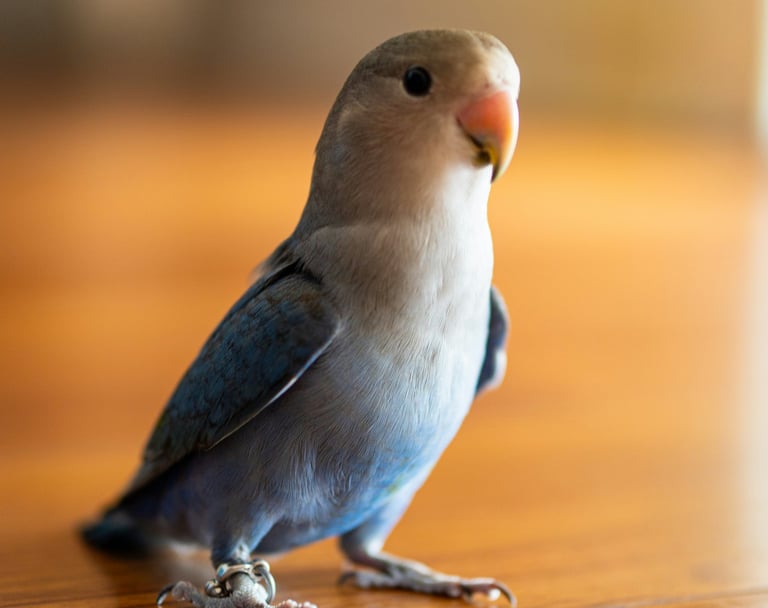
The Logic (The Contact Call): A parrot’s alarm is often a "Contact Call." They aren't just shouting at the window; they are shouting at you to see if you are still there and if you are calm. If you ignore them or shout "Quiet!", they hear you "shouting back," which confirms to them that there really is an emergency!
The Tactical Reset (The Receipt Whistle): To lower the volume, you have to provide an "Information Receipt." Establish a specific, calm whistle or a short, melodic phrase (like "I'm right here!") for when you are out of sight.
The Key: When they alert, answer with that same calm whistle. This provides the "All Clear" they need without you even having to enter the room. Once they hear your calm "receipt," the biological need to scream for a search-and-rescue mission disappears.
The Weekly Reset (The Explorer Brain):
Birds are incredibly intelligent and can become hyper-focused on "policing" a window if their environment is too predictable.
The Strategy: Every time you clean the cage (at least once a week), completely rearrange the layout. Move the perches, swap the location of their favorite swings, and rotate their "toy library."
Why it works: A fresh environment shifts their brain from Sentry Mode to Investigative Mode. A bird busy figuring out the best way to reach their new perch position is a bird too occupied to worry about the neighborhood traffic.
The Visual "Fine Line": High-traffic windows can cause "Data Overload." You can help by moving the cage slightly back or using privacy film on the lower portion of the glass to shrink their "monitored territory."
The Petz Logic Warning: Use this strategically. Birds need visual stimulation to stay sharp. The goal is to manage the intensity of the data, not to delete it. A total visual blackout can lead to boredom, so find the balance that lets them watch the world without feeling the need to police it.
The Foraging "Volume Knob": As every bird owner knows, a busy beak cannot scream! At the first sign of an alert, provide a "Low-Arousal" foraging task, like a favorite nut wrapped in multiple layers of plain paper. This shifts their energy from vocal output to physical extraction, naturally lowering the house volume.their day policing the window.
The Logic (The Vibration Alarm):
A distant lawnmower, a heavy footstep, or even a vacuum cleaner in another room is a massive data point. A rabbit’s "thump" or a guinea pig’s sudden "freeze" is a sophisticated alarm meant to notify the rest of the flock (you) to stay vigilant. They are waiting for a sign that you have received the message and that the environment is safe.
The Tactical Reset (The Grounded Receipt): When your pet sounds the alarm, do not ignore it or try to "shush" them. Walk over calmly and offer a "Low-Arousal Receipt." * The Strategy: Use a gentle, grounded touch (like a slow stroke from the forehead to the ears) or offer a "peace offering" like a fresh sprig of cilantro or a high-fiber hay cube.
The Logic: Your calm, physical presence acts as the "All Clear." By staying relaxed and grounded, you provide the sensory data their nervous system needs to realize the "threat" has been evaluated and the environment is stable.
The Human Element: Mirroring the Peace
Birds are the ultimate Energy Mirrors. They don't just hear your voice; they feel your heart rate. This system requires a family-wide, repetitive commitment.
You must be certain and composed. If you are running around stressed, your bird will escalate their volume to match your "alarm" energy. When you respond to their alerts with a steady, certain voice, you are proving that the flock is under control. When the family uses the same "Receipt Whistle" and the same calm reactions, the bird finally gets the message: "The humans have this handled. I can go back to my toys."
Small Mammals: The Dedicated Burrow Sentries
For a rabbit, guinea pig, or rat, the "territory" isn't just a cage—it’s their sanctuary. Their survival depends on the Logic of the Burrow, a biological program that relies on feeling micro-vibrations and hearing high-frequency sounds that humans often miss. When a small mammal sounds the alarm, they aren't being "skittish"; they are acting as the group’s highly diligent early-warning system.


The Weekly Reset (Habitat Architecture):
These pets have a biological drive to constantly "re-map" their surroundings. To prevent them from getting "stuck" in a high-alert sentry loop, they need a mental job.
The Strategy: Every time you clean their enclosure (which should be at least once a week), completely rearrange the floor plan. Move the tunnels, swap the location of the hidey-holes, and rotate their accessories.
Why it works: This shifts their brain from Sentry Mode to Explorer Mode. A guinea pig busy figuring out the new path to their favorite hiding spot is a guinea pig too occupied to worry about phantom sounds.


Birds (Avian): The Eyes in the Sky
In the wild, a bird’s survival depends on the Sentry Instinct. In a flock, the "Sentinel" perches high and watches the horizon so the rest of the group can safely eat and preen. When your bird is in your home, they view you as their flock. When they let out a sharp call as the mail carrier arrives or a shriek when they hear a strange car, they are performing a vital service. They are saying, "I see a change! Are we all aware? Are we all safe?




The Sensory "Safe Zone" (Substrate Layering):
Ensure they have deep layers of varied textures, like timothy hay over paper shreds or safe wood shavings.
The Logic: If an animal feels they have the "Mechanical Logic" to hide effectively, their need to sound the alarm decreases. Deep bedding allows them to "excavate" and feel physically secure within their territory, lowering their overall arousal levels.
The Human Connection: Cultivating a Collective Calm
Because small mammals are "biological sensors," they don't just listen to your voice—they mirror the energy of the entire household. For the Logic of the Burrow to truly take hold, the environment must feel stable and synchronized.
Family Synchronization: Consistency is the ultimate safety net. If one person responds to a "thump" with a frantic "What’s wrong?!" while another uses a calm "All Clear," the animal receives garbled data. Every member of the family needs to adopt the same rhythmic approach: moving with purpose, keeping voices steady, and using a uniform "Receipt" signal.
The Power of Predictability: To a prey animal, the "unknown" is the greatest threat. By being a predictable anchor in their world, you reduce their need to stay on high alert. When your reactions are steadfast and your movements are fluid, you provide the "social proof" that the territory is secure.
Grounded Leadership: They aren't just watching your hands; they are reading the tension in your muscles and the rhythm of your heart rate. If you are vibrating with stress, they will vibrate with alarm. By practicing grounded composure, you aren't just "managing" them—you are inviting them to exhale. You are giving them the most valuable resource a small mammal can have: a sanctuary where they can finally stop scanning for danger and simply be at peace.
The Petz Logic Rule: Acknowledging the alert completes the biological loop. When the pet knows the information has been received and evaluated by a certain, composed leader, the "Sentry" can officially go off-duty. This allows their brain to shift from high-alert back to a relaxed, engaged state.


Reptiles & Amphibians: The Guardians of the Glass
Unlike our more vocal companions, reptiles and amphibians are masters of visual dialogue. Their sentry instinct is built on absolute sensory precision. In their world, every shadow, reflection, or movement outside the glass is a data point that needs to be categorized as "Safe," "Resource," or "Threat." When a lizard head-bobs or an iguana stands tall on its front legs, they are engaging in a sophisticated territorial alert.
The Logic (The Visual Signal): Because they are so visually oriented, their "Alarm" is often triggered by the Logic of Reflections. If they see a shimmer in the glass that looks like another animal, their brain locks into a sentry loop. They aren't being "aggressive"; they are simply trying to verify the status of their boundary line to ensure their environment remains predictable.
The Tactical Reset (The Resource Transition): To break a stuck sentry loop—like the repetitive "glass-dancing" often seen in bearded dragons—you have to shift their brain from Territorial Defense to Resource Acquisition.
The Strategy: Use soft-tipped feeding tongs or a target stick to lead the animal to a different "zone" of the enclosure.
The Logic: By making them follow a target and engage their motor skills for a reward, you are forcefully "re-booting" their processor. You are telling their amygdala: "The perimeter is clear; focus on the hunt."
The Weekly Swap (Environmental Evolution): In the wild, landscapes shift with the seasons. A static, unchanging tank can lead to "Sensory Stagnation," where the animal becomes hyper-fixated on the glass because nothing else is happening.
The Strategy: During your weekly deep clean, exchange at least two elements. Bring in a new sanitized basking rock, rotate the position of their climbing branches, or introduce a different texture like safe, dried leaf litter.
Why it works: Introducing new scents and visual textures shifts their focus from "Policing the Boundary" to "Investigating the New." It satisfies their biological urge to explore and map out fresh territory.


The Visual Blind (Managing the Intensity): If your reptile is constantly triggered by movement in the room or their own reflection, use privacy film or a non-reflective background on three sides of the tank.
The Petz Logic Balance: This reduces the "Data Load" on their brain. By shrinking the amount of space they feel responsible for monitoring, you allow their nervous system to drop from "High Alert" to a state of calm, observant rest.
The Human Element: The Art of the Low-Arousal Presence
Reptiles and amphibians don't read "feelings," but they are expert sensors of motion and intent. To successfully close their sentry loop, you must become a "Low-Arousal Presence" in their world.
Family Motion Logic: High-speed movement or heavy shadows passing the tank are interpreted as "predator data." For the family to be on the same page, everyone should practice fluid, purposeful movement around the enclosure. No sudden reaches or frantic tapping on the glass.
The Observational Receipt: Instead of just walking past, take a moment to be a "Calm Observer." If your reptile is alerting, stand still and allow them to observe you being relaxed. Your lack of "threat energy" provides the social proof they need that the territory is secure.
Steady Certainty: By being the steady, predictable element in their environment, you bridge the gap between their prehistoric instincts and your modern home. When your movements are certain and your interactions are consistent, the "Sentry" can finally stand down, moving from a defensive posture back into a state of growth and health.
The Petz Logic Rule: Acknowledging the alert completes the biological loop. When the pet knows the information has been received and evaluated by a certain, composed leader, the "Sentry" can officially go off-duty. This allows their brain to shift from high-alert back to a relaxed, engaged state.


From Sentry to Sidekick: The Power of Information
Your pets didn't come with an instruction manual, but they did come with a finely tuned set of biological survival programs. For too long, pet owners have been stuck in a cycle of guesswork—wondering why the barking won't stop, why the screaming escalates, or why the "thump" feels like a personal critique of the household.
By shifting your perspective from managing a "problem behavior" to processing an "information flow," you change the entire dynamic of your home. You aren't just a "pet owner" anymore; you are a reliable partner and a certain leader.
The Path to a Peaceful Home
Stop Guessing: Recognize that every alert—whether it’s a bark, a hiss, a shriek, or a head-bob—is a data point meant for you.
Provide the Receipt: Use your species-specific "Tactical Resets" to let your pet know the message was received.
Close the Loop: Reclaim the lead by directing them into a composed state or a focused task.
Stay Consistent: Remember that a house divided by different reactions is a house that stays on high alert. When the whole family speaks the same "logic," the pets finally feel safe enough to stand down.
At PetzLogic.com, we believe that great pet ownership isn't about being perfect—it's about being correct with your information. When you understand your pet’s behavior, you stop living in a state of reaction and start living in a state of confidence.
The "Sentry" in your home is ready to go off-duty. They are just waiting for you to take the lead.
Petz Logic: Stop Guessing, Start Knowing.



The Human Element: Harmonizing the Pack and the Pride
While dogs and cats have different ways of "alerting," they both share a superpower: they are absolute experts at reading human energy. For the Petz Logic system to work, the humans in the house need to be as organized as the animals. If one person reacts to a bark with a shout, while another uses a calm "slow blink" for the cat, the information flow becomes garbled, and the pets stay on high alert.
Household Synchronization: Consistency is the "All Clear" signal your pets are looking for. Every family member needs to be on the same page—using the same tactical noises (like that crisp finger snap or soft "shush") and the same physical receipts. When the whole family reacts with the same calm certainty, your pets realize that the humans have the security situation handled.
The "Truth" in Your Presence: You can't fake a composed state. Dogs hear the truth in the frequency of your voice, and cats feel the truth in the rhythm of your movements. If you are rushing or frantic, they interpret that as "Alarm Data." By practicing composed leadership, you aren't just "training" them—you are providing the social proof they need to realize the environment is safe.
The Reward of Redirection: Don't just acknowledge the "Alert." Celebrate the "Calm." When your dog chooses to sit after a bark, or your cat turns away from the window to engage with a toy, offer a quiet, warm word of praise. You are teaching them that "Off-Duty Mode" is a highly valued job in your household.
The Petz Logic Rule: Acknowledging the alert completes the biological loop. When the pet knows the information has been received and evaluated by a certain, composed leader, the "Sentry" can officially go off-duty. This allows their brain to shift from high-alert back to a relaxed, engaged state.
The Petz Logic System Download the Free P.L.A.Y. Scorecards & More Shop Digital Trackers & Premium E-Books & Systems by Petz Logic


© 2026 Petz Logic. All Rights Reserved. Empowering you with knowledge, not prescriptions. This content is for educational use and does not replace your vet. As an affiliate, we may earn a commission from qualifying purchases at no extra cost to you.
Petz Logic™ and the Petz Logic logo are trademarks used by PetzLogic.com.
Contact me & tell me your story


Don’t miss out Join the Pack
We are constantly adding new logic and tools to the hub. Enter your email to be notified when we release new guides or major updates. No spam, just logic.
petzaremylife@petzlogic.com


A Personal Note
I’m building this ecosystem by hand, piece by piece. Since it’s just me behind the blueprints, I’m always open to hearing your concerns and evolving this design with your feedback. As we grow, I’m planning to add a dedicated Q&A section to help tackle the specific logic of our pets' lives.
All I ask is that you bring those words with kindness. Let’s keep this community as respectful as the animals we love.
Thank you so much 😊
Mo