PAIN AS BEHAVIOR:
The Silent Blockage
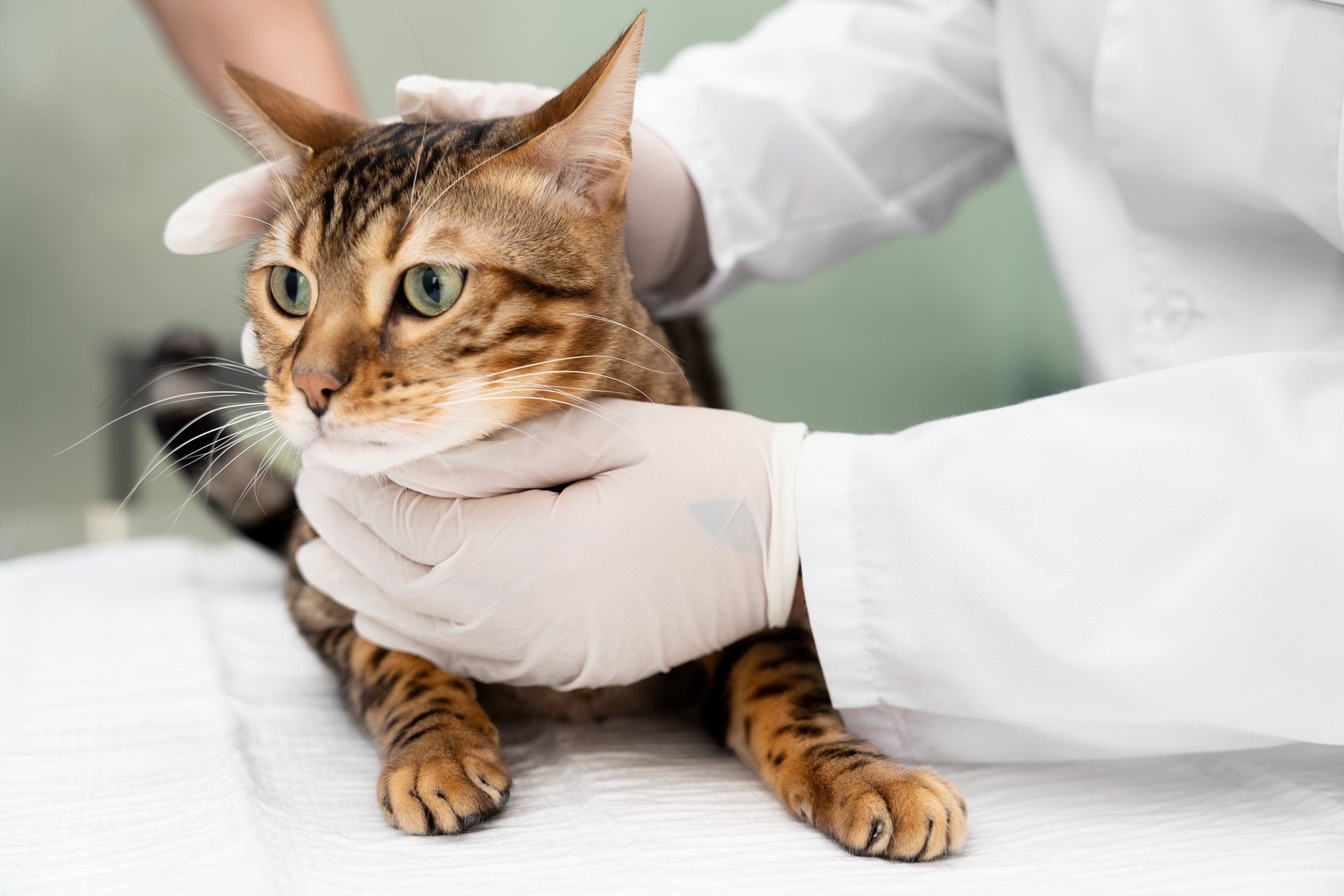
In the world of Petz Logic, I believe behavior is never random. It is a data point. When a pet—whether a Great Dane, a Cockatiel, or a Rat—begins to act "out of character," they aren't being difficult. They are communicating a physical blockage.
As Guardians, our job is to stop guessing and start knowing how to read the silent language of discomfort.
The Evolutionary Mask: Why They Hide It
In the wild, showing pain is an invitation to predators. This instinct doesn't disappear just because an animal is safe in your home. By the time an animal shows obvious distress—like a limp or a vocalization—the pain has often progressed significantly. To be a proactive Guardian, we look for the micro-shifts in daily routine.
Translating the "Personality Change"
What we often label as a bad attitude is usually a physical limitation:
The "Grumpy" Reflex:
A sudden nip or snap when touched in a specific spot isn't a loss of training; it’s a defensive reflex to protect a "blockage" or tender area.
The "Lazy" Shift:
A sudden drop in activity level isn't boredom. It is the animal's way of "self-splinting"—limiting movement to avoid aggravating an internal ache.
The "Stubborn" Refusal:
If a pet stops performing a routine task (climbing a ladder, jumping on a perch, or sitting on command), it’s rarely defiance. It’s a physical "No" from the body.


Universal Signs of a Silent Blockage
A "blockage" can be anything from a pinched nerve to digestive stasis. While every species is unique, the language of pain has universal markers:
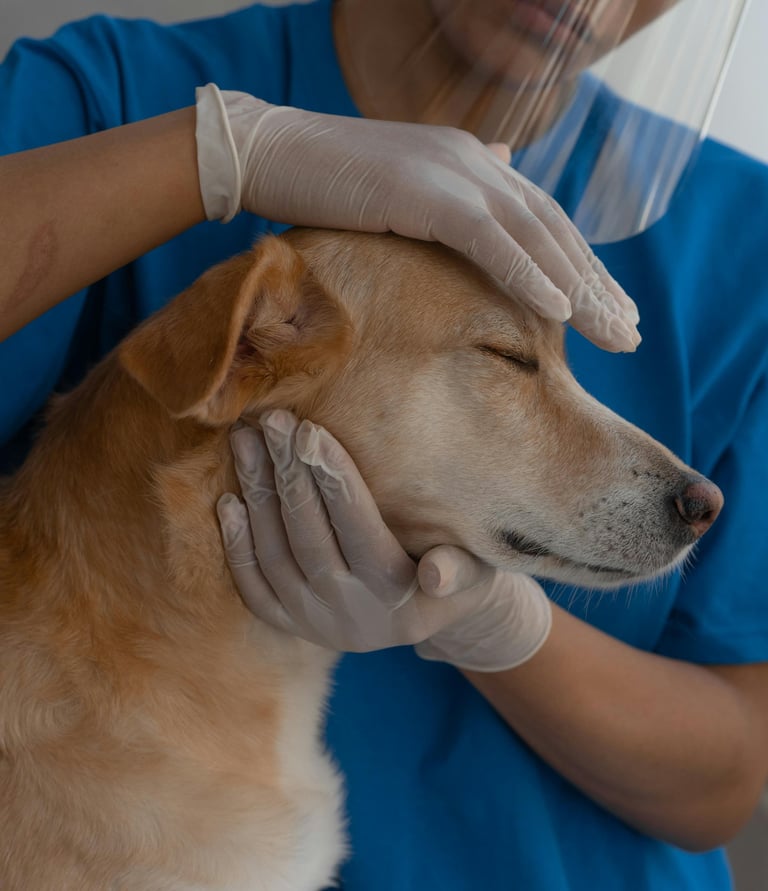
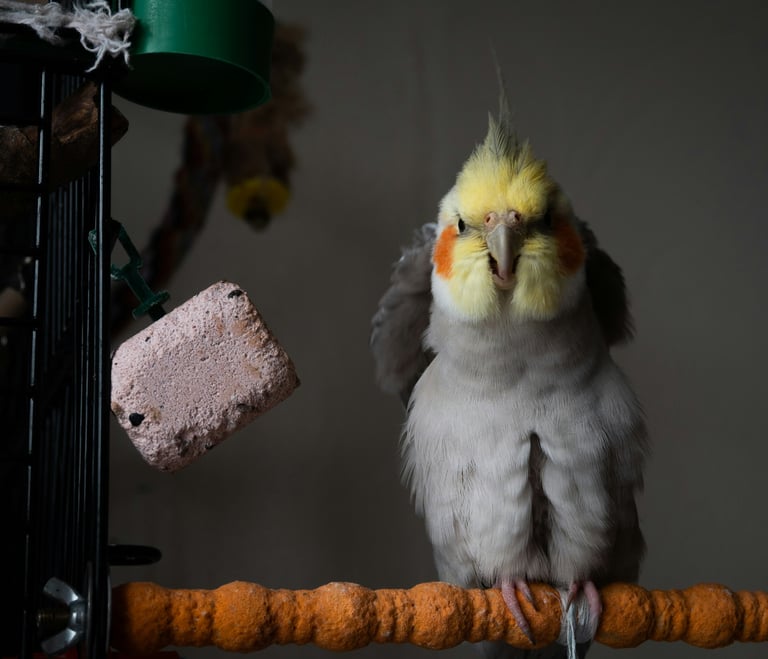
Postural Shifts I look for changes in how they hold their weight. In mammals, this often looks like a "roached" or arched back. In birds, it might manifest as drooped wings or sitting much lower on the perch than usual. Even a slight tilt in how they stand can indicate they are compensating for a blockage elsewhere.
The "Pain Face" and Gaze Across almost all species, pain shows in the eyes. Look for a "fixed" or distant stare, squinting, or a tightened brow. This "hollow" look is a clear indicator of internal distress.
Withdrawal and The "Huddle" If a social animal suddenly seeks out corners, stays on the floor of their enclosure, or withdraws from the rest of the household "Faculty," they are likely diverting all their energy toward managing pain.
Compulsive Self-Soothing Animals will often obsessively focus on the area that hurts. This might look like a cat or dog licking a joint until the hair is thin, or a bird plucking feathers from a specific spot on their chest or wing.
The Petz Logic Strategy:
Actionable Steps
I use a structured system to catch these blockages before they turn into behavioral "problems."
Define the Baseline: Every Guardian should have a "Normal" profile for their pet. How do they move? How do they eat? How do they interact? When I know what "Normal" looks like, "Different" becomes a loud and clear warning.
The Guardian's "Body Scan": Once a week, I perform a gentle physical check. For mammals, this is a hands-on muscle rub to feel for heat or tension. For birds or smaller pets, this is a close visual inspection of their posture and weight distribution.
Monitor the P.L.A.Y. Score: If the willingness to engage drops even slightly, the first question I ask is: "Where does it hurt?" instead of "Why aren't they listening?"
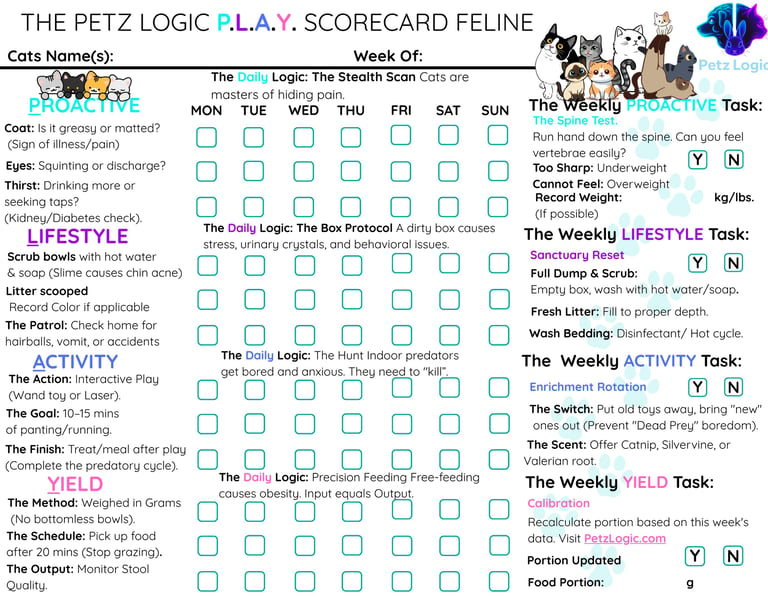
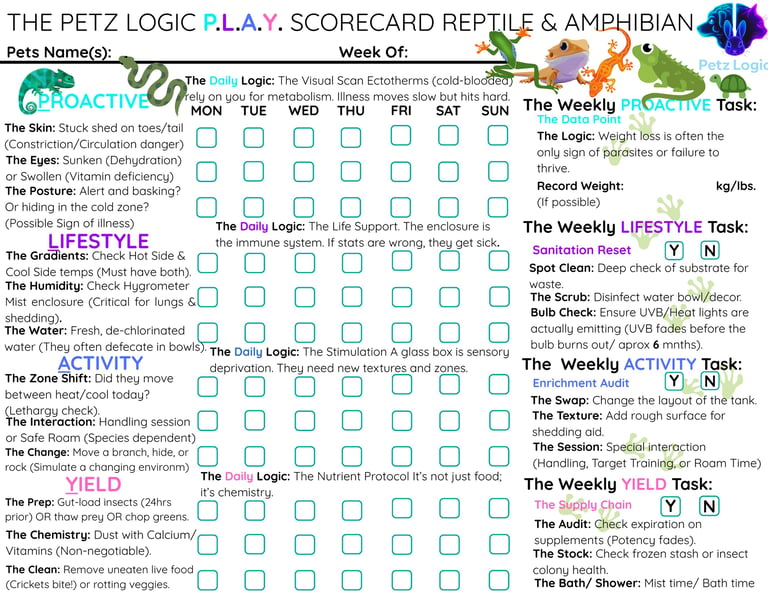
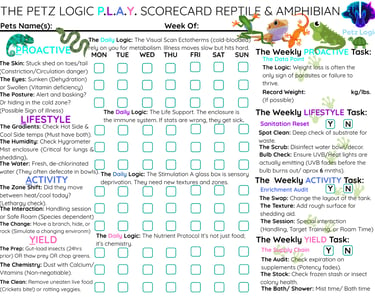
A comfortable pet is a confident pet. Grab your free tracking sheets today and take the guesswork out of your pet's health.
The Petz Logic System
Download the Free P.L.A.Y. Scorecards & More Shop Digital Trackers & Premium E-Books & Systems by Petz Logic
© 2026 Petz Logic. All Rights Reserved. Empowering you with knowledge, not prescriptions. This content is for educational use and does not replace your vet. As an affiliate, we may earn a commission from qualifying purchases at no extra cost to you.
Petz Logic™ and the Petz Logic logo are trademarks used by PetzLogic.com.
Contact me & tell me your story


Don’t miss out Join the Pack
We are constantly adding new logic and tools to the hub. Enter your email to be notified when we release new guides or major updates. No spam, just logic.
petzaremylife@petzlogic.com
A Personal Note
I’m building this ecosystem by hand, piece by piece. Since it’s just me behind the blueprints, I’m always open to hearing your concerns and evolving this design with your feedback. As we grow, I’m planning to add a dedicated Q&A section to help tackle the specific logic of our pets' lives.
All I ask is that you bring those words with kindness. Let’s keep this community as respectful as the animals we love.
Thank you so much 😊
Mo